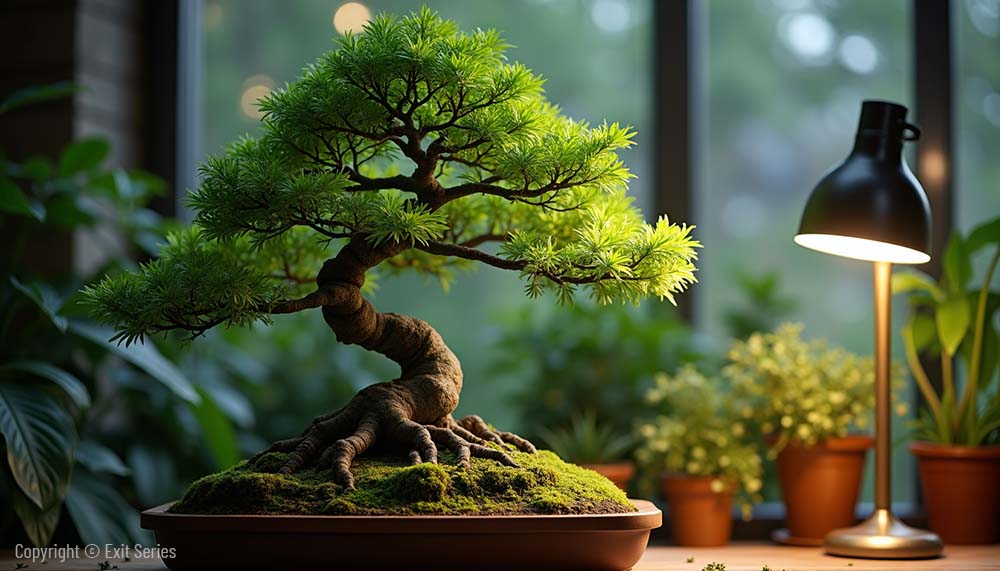
Exitseries.com – Lighting to bonsai trees is one of the most critical factors in keeping your miniature tree healthy, vibrant, and thriving. Without adequate light, bonsai lose vigor, develop long internodes, pale foliage, and may fail to bounce back after pruning. In this guide we will cover how much light, what kind of light, and how to set up lighting for bonsai to achieve optimal growth.
Why “Lighting to Bonsai Trees” Matters
Bonsai are essentially full-sized trees grown in tiny containers, and thus they depend heavily on external conditions. Unlike trees in the ground, bonsai have limited root volume and soil, so they must maximize energy capture via leaves and light. According to Wikipedia, indoor bonsai often suffer because “an indoor room comfortably lit for human use provides too little light for most species of tree to grow.”
Therefore, understanding lighting to bonsai trees means giving them the right intensity, spectrum, duration, and placement.
1. How Much Light Do Bonsai Need?
Before diving into equipment, it’s crucial to understand the requirements so you can choose or calibrate lighting properly.
Explanation
Different bonsai species (temperate vs tropical) have different light demands. Without adequate lighting, growth becomes weak, leaves pale, and the bonsai may lose its “bonsai form”. Here is a comparative table of approximate requirements:
| Bonsai Type | Light Intensity* | Daily Hours |
|---|---|---|
| Temperate climate tree | ~700 lux for ~9 hours | ~9–12 hours |
| Subtropical species | ~1,000–2,500 lux | ~12–15 hours |
| Tropical / indoor bonsai | ~1,500–5,000 lux | ~12–15 hours |
*Lux values are approximate minimums; higher is better if other conditions (humidity, root health) are optimal.
Key take-aways:
- Provide at least 12 hours of good light for indoor bonsai.
- If your natural daylight is weak (north-facing, shaded), you’ll need artificial lighting.
- Duration and intensity both matter: even bright light needs sufficient hours, and long hours with weak light may still fail.
2. What Kind of Light Should You Use?
Explanation
Not all light is equal when it comes to plant photosynthesis and bonsai health. We must look at spectrum (colors), heat generation, and fixture design.
Key Components
- Spectrum: Plants use primarily blue (≈400-500 nm) and red (≈600-700 nm) wavelengths. Full-spectrum lights (daylight white, “plant growth” rated) are ideal.
- Heat / Distance: Lights that generate too much heat may damage leaves if placed too close; those that produce little heat allow closer placement.
- Fixture type: LED grow lights are preferred due to energy efficiency and low heat. Fluorescent tubes (T5/T8) also work for smaller setups. Traditional incandescent or high-heat lamps are not recommended.
Practical Tips
- Choose an LED grow light labeled full-spectrum / plant growth.
- Hang it about 30-40 cm (≈12-16 inches) above the bonsai for many setups.
- Avoid placing hot lamps too close to foliage, which may cause burn.
3. How to Set Up Lighting for Your Bonsai
Explanation
Even with the right equipment, your setup matters. Placement, cycle (on-off timing), and rotational symmetry all affect results.
Setup Checklist
- Positioning:
- For indoor bonsai near windows: place as close as possible to a bright window (preferably south-facing in the Northern Hemisphere).
- If relying on artificial light: ensure the fixture is centered over the tree, and adjust height as it grows.
- Lighting cycle:
- Aim for a total of 12-15 hours per day (natural light + supplemental). Using a timer helps.
- Do not keep lights on overnight continuously; bonsai need a dark period to rest.
- Rotation:
- Rotate the bonsai weekly (e.g., one quarter turn) so all sides receive equal light and prevent skewed growth.
- Monitoring & adjustment:
- Watch for signs: pale leaves, elongated internodes, leaf drop → insufficient light.
- If leaves scorch or fade → light too intense or too close, heat stress.
4. Common Mistakes & How to Avoid Them
Explanation
Even experienced growers can slip into setups that seem fine but cause long-term problems. Here are frequent errors with lighting to bonsai trees — and how to fix them.
| Mistake | Why it happens | Solution |
|---|---|---|
| Using regular indoor lighting only | Human-comfortable light is too weak for trees | Add dedicated grow light or move to brighter spot |
| Keeping lights too far / too low intensity | Light falls off rapidly with distance | Raise fixture height (if heat low) or get stronger light |
| Leaving lights on too long or no dark period | Disturbs plant hormone rhythms | Use timer; ensure dark window each day |
| Ignoring light spectrum | Some lights look bright to human eye but lack red/blue required by plants Bonsai Nut | Use full-spectrum grow light rated for plants |
5. Quick Reference Table for Indoor Bonsai Lighting
Explanation
Here’s a summary cheat sheet you can print or keep near your bonsai setup for quick reference.
| Aspect | Ideal Value / Practice |
|---|---|
| Daily light hours | 12-15 hours (natural + supplemental) |
| Fixture height | ~30-40 cm (~12-16 in) above foliage |
| Light spectrum | Full spectrum (400-700 nm) |
| Light intensity | ≥1,000 lux for indoor/ tropical types |
| Light cycle | Timer-controlled, with night dark period |
| Rotation frequency | Weekly |
| Monitoring signs | Dark green foliage, compact growth, no leaf drop |
Conclusion
Lighting to bonsai trees isn’t a matter of “just add a lamp” — it’s about giving the right spectrum, intensity, duration, and position so your bonsai can thrive, not just survive. By understanding what bonsai need and setting up accordingly, you’ll see better vigor, healthier foliage, and more robust growth. Use this guide to optimize your lighting strategy, monitor your trees, and adjust as needed. Your bonsai will thank you with beauty and vitality.